Mobile App Development
A Complete Development Guide to an AI-Powered Mobile App in...
 Prabhnoor Kaur
- September 8, 2026

 Prabhnoor Kaur


Choosing a tech stack is one of the first major decisions in any project. It determines your budget and launch date. It also affects how users feel about your product.
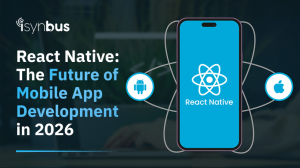
The choice in 2027 remains the same. Use react native development to go cross-platform or Kotlin and Swift to go native. It’s not necessary for either to be correct. This comprehensive blog post will break down what matters so you can make more informed decisions with confidence.
Writing distinct code for each platform—Kotlin for Android and Swift for iOS —is known as native development. One is written in Kotlin for Android, while the other is written in Swift for iOS. Each app communicates with the device directly.
However, React Native works differently. Developers write most of the code in a JavaScript (JS) or TypeScript codebase that works across both platforms. Brands like Walmart, Bloomberg and Wix have used this in production. Also, the framework has matured a lot, and its newer architecture has closed many of the previous performance gaps.
Usually budget is the first filter. Two native apps, two teams, two code bases and two testing cycles. A React Native project shares most of that work, and industry estimates often put the savings at 30 to 35 percent for the same app.
A mid-complexity native app for both platforms may cost between $60,000 and $150,000 in real numbers. React Native apps typically cost between $35,000 and $100,000. Your actual quote depends on features, integrations and team location.
Speed is treated the same way, too. One codebase means one release plan, so features make it to both platforms together. For a startup racing to a launch date, that gap can be crucial. That’s why many founders begin their journey of custom mobile app development with a shared codebase.

Here, Native still has the upper hand. Native code is ideal for complex 3D graphics, sophisticated augmented reality, and real-time video processing. Use native if your app’s performance is crucial.
But the gap is small for most business apps. Think booking tools, dashboards, marketplaces and delivery apps. React Native does a good job of handling these scenarios, and users are not often aware of the difference.
And the design is just as important. Good mobile app design services can make a React Native app native to each platform. iOS users expect a gesture to work a certain way. Android users are looking for others. A good design team respects both without making the app look generic.
| Factor | React Native | Native |
|---|---|---|
| Codebase | One shared | Two separate |
| Typical cost (both platforms) | $35,000–$100,000 | $60,000–$150,000 |
| Time to market | Faster | Slower |
| Performance | Strong for most apps | Best for heavy workloads |
| New OS features | Slight delay | Available on day one |
| Maintenance | One team, one fix | Two teams, two fixes |
For bigger companies, the questions are different. Security, integrations, compliance and long-term support all matter. Many need apps that plug in to ERP systems, CRMs and internal data platforms. That’s where enterprise application development services come in. A good partner will design the backend, APIs and security layers first. Then the front-end flavor.
Think about the complete spectrum of apps and app types the business may require in the next few years. Client apps. Tools for employees. Partner Portals. Frequently, custom enterprise software development integrates these with web dashboards and admin panels. Having the code shared between them saves real time. Using React Native for mobile and React for the web makes this integration easier.
Even great code struggles without a good release process. Apps are kept stable by automated testing, continuous integration and smooth deployments. So, you will see many teams working with DevOps companies in India to build pipelines that ship updates every week, not every quarter. React Native gets a bonus here, as over-the-air updates can push small fixes without a full store review, within each store’s guidelines.
The gap keeps getting smaller. With React Native’s new architecture, JavaScript can talk to native code more directly, which reduces lag and makes scrolling feel smooth. Debugging and testing now feel more natural thanks to better tooling. But new OS-level features, like on-device AI tools, tend to hit native SDKs first. React Native is still catching up with libraries, so there may be a delay. If you want those features on launch day, budget for it.
Choose React Native when you want to ship on both platforms fast, the budget is tight, or you want to iterate often. Good fit for MVPs, e-commerce apps, social features and internal tools.
If you want the newest OS features right now or if performance is your top concern, go native. It also works for apps that use complex hardware, like sensors, Bluetooth devices or advanced camera features. And if you’re only targeting one platform, native is usually the easier route.
The middle path is there too. Some teams use React Native for the main app and integrate native modules when certain screens require better performance. You get speed and power together with that combination.
It is easier to choose the right way if you have someone who has built both. We offer React Native development services, starting with your objectives rather than our preferences. We map out your users, your budget and your timeline before we write a single line of code.
Many founders compare the price tags and shortlist a React Native app development company India has to offer. Go deeper. Ask about communication, post-launch support and testing. Those details decide if your app thrives or fails.
There is no single winner. React Native wins on speed & savings. Native wins on raw power and deep platform access. Match the choice to your product goals, and you’ll get it right. Ready to talk it through? Contact Isynbus , and we will assist you in planning the smartest path for 2027.

Get the latest insights, updates, and trends delivered to your inbox.