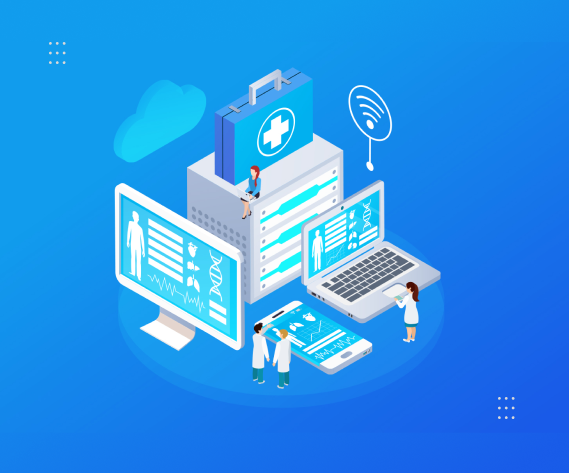
There is increasing pressure on modern healthcare settings to manage expenses and administrative strains while enhancing care delivery. Technology is a potent remedy that is revolutionizing operational workflows, diagnostics, and patient management. Digital systems free up staff members to concentrate on delivering direct, high-quality care by automating repetitive processes like scheduling and billing, and granting immediate access to all the vital patient data. Any trustworthy healthcare software development company places a high priority on creating unique, secure platforms. So, modernizing the industry depends on incorporating technology into day-to-day operations.
Key Ways Software is Boosting Efficiency in Healthcare Today
The healthcare sector is undergoing a revolution, which is simplifying processes and enhancing patient care. These solutions are replacing paper-based systems, increasing efficiency, decreasing errors, and fostering a responsive and connected environment with the help of healthcare software development services. Software integration is a fundamental shift that improves healthcare for all parties involved, not just an upgrade.
Streamlining Administrative Tasks
Software has taken over many of the administrative tasks that used to take up much time for staff. Integrated systems handle appointments, patient check-ins, and billing. For example, patients can book appointments and complete forms online. Automated reminders help reduce much time. With custom healthcare software development, it saves a lot of staff time and makes the process easier and convenient for patients, which enhances the overall experience. By automating these financial workflows, healthcare facilities can create a better economic environment and move staff to other important areas.
Improving Patient Data Management
Systems for electronic health records (EHRs) are essential to transformation. All patient data, including lab results, prescription drugs, treatment plans, and medical histories, is digitized and centralized by these systems. Consequently, regardless of the patient’s location, healthcare providers have access to the patient’s entire medical history. Making educated decisions and delivering continuous, coordinated care depend on having rapid access to up-to-date data. Errors associated with old paper records, such as unreadable handwriting or lost files are also significantly reduced by such a digital approach.
Enhancing Communication and Collaboration
Modern healthcare software promotes better communication among medical teams and with patients. Internal messaging and notification features in EHRs let doctors, nurses, and other specialists securely share information and work together on patient care plans in real-time. Moreover, all this improved coordination keeps everyone informed, which is crucial in complex cases or emergencies. Patient portals are another important tool that enhances communication. The best healthcare software provides patients with secure access to their health records, test results and appointment schedules.
Enabling Remote Care and Telehealth
Software has made it possible to provide care outside of traditional clinics using telemedicine platforms. These systems allow patients to have virtual consultations with their doctors from home. This is especially helpful for people with mobility challenges, those living in rural areas, and those needing follow-up appointments that don’t require a physical visit. Telehealth cuts down travel time and costs for patients, and it helps healthcare facilities manage their patient load efficiently. Moreover, remote patient monitoring is becoming more common with connected devices and applications.
Boosting Diagnostic and Treatment Accuracy
Software is important for increasing the precision of diagnoses and the efficacy of treatment regimens. Radiologists and other experts can more correctly evaluate scans like MRIs and X-rays with the use of medical imaging software. These instruments can draw attention to minute details that the human eye might overlook. On the other hand, this results in earlier and precise disease detection. Large volumes of patient data can also be processed by data analytics tools in healthcare software to find trends and patterns. It aids medical professionals in choosing the most effective treatment plan.
Improving Operational and Financial Management
Software is making healthcare organizations more efficient as businesses, even outside of clinical care. Hospital management systems combine tasks into one platform, such as accounting, facility management, and human resources. It gives administrators a comprehensive picture of how well the company is performing, enabling them to make data-driven choices that will increase productivity and cut waste. In particular, financial management software automates intricate coding and billing procedures. It enhances the hospital’s revenue cycle and economic stability by assisting in making sure that services are accurately billed and that insurance companies receive accurate claims.
Enabling Predictive Health and Proactive Care
Software has made it possible to provide care outside of traditional clinics using telemedicine platforms. These systems allow patients to have virtual consultations with their doctors from home. It is especially helpful for people with mobility issues, those living in rural areas and also those needing follow-up appointments that don’t require a physical visit. Telehealth cuts down the travel time and costs for patients, and it helps healthcare facilities manage their patient load more efficiently. Moreover, remote patient monitoring is becoming more common with connected devices and applications.
Final Words
To sum up, through the simplification of administrative duties and the improvement of clinical procedures, software increases healthcare efficiency. Electronic health records (EHRs) and other similar technologies digitize patient data by removing paper records and providing instant access to data for authorized personnel. It reduces errors, saves time spent on manual entry and also improves coordination among different care providers. Companies recognize the importance of healthcare application development to create specialized tools that address operational challenges. Automated prescription management and scheduling systems also lessen the administrative load on employees.







 Prabhnoor Kaur