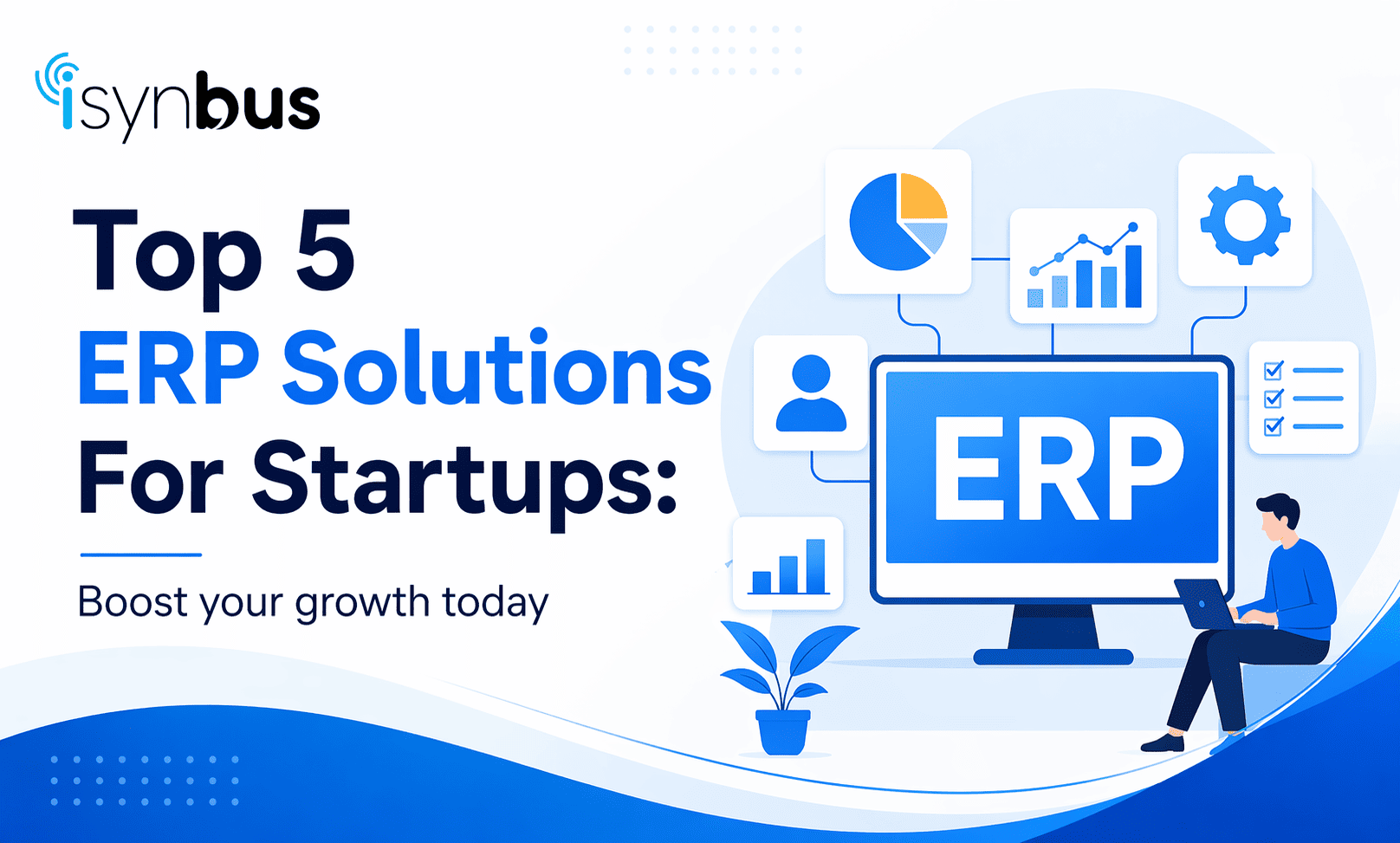
In the fast-paced world of startups, having the right tools can make all the difference between success and
failure. Enterprise Resource Planning (ERP) systems are crucial for startups looking to streamline their
operations, improve efficiency, and drive growth. This article will explore the top 5 ERP Solutions that can
help startups achieve these goals.
In a nutshell:ERP systems are the backbone of modern business scaling. This guide covers
how to choose the right solution for your startup’s unique needs in 2026.
What is ERP And Why Do Startups Need It?
ERP Systems integrate various business processes into a single unified system, providing real-time data and
analytics. This means improved efficiency, scalability, and informed decision-making for startups. By
connecting functions such as accounting, inventory management, CRM and Human Resources, ERP systems help
startups manage their resources more effectively and focus on growth.
$43.72BMarket Size (2020)
$117.09BProjected (2030)
10.0%Projected CAGR
95%+Cloud Adoption
Expert Insight: The cloud has made a permanent mark on the ERP and technology industry,
making robust enterprise tools accessible even to the smallest bootstrapped ventures. Source: Allied Market
Research 2023.
Criteria For Choosing An ERP Solution
When selecting an ERP System, startups should consider these core factors to ensure long-term sustainability:
1. Cost-Effectiveness
Is the ERP System affordable? Startups with limited resources need solutions with low overhead and
transparent pricing.
2. Ease of Use
Is the system user-friendly and easy to implement? Rapid onboarding is essential for fast-moving
teams.
3. Scalability
Can the ERP System grow with your startup? You don’t want to outgrow your technology within the first
year.
4. Feature Richness
Does it offer the specific features your startup needs? Look for modules that align with your unique
industry.
5. Dedicated Support
Is reliable support available when needed? Responsive customer service can save your business during
critical updates.
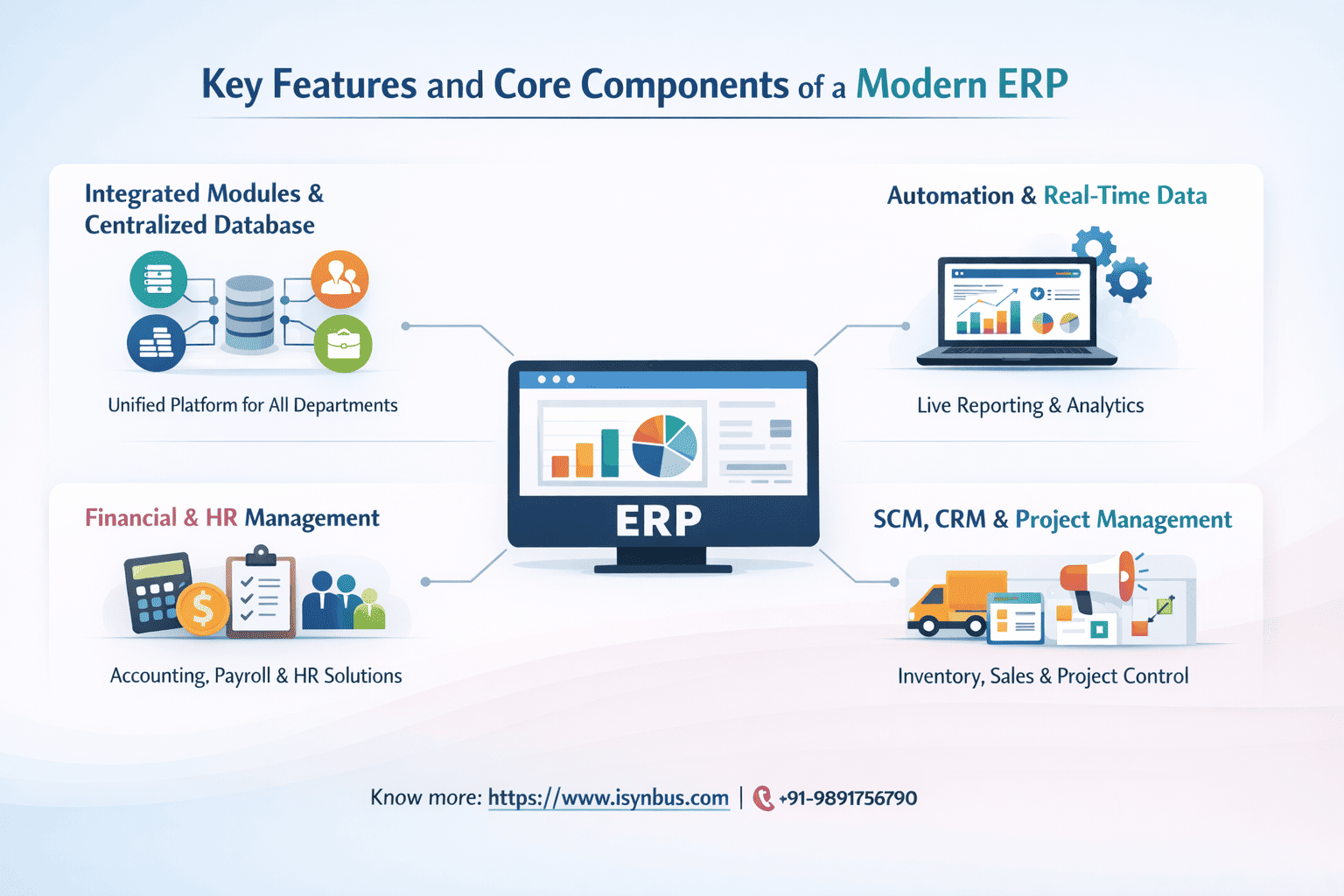
Key Features and Core Components of a Modern ERP
A true Enterprise Resource Planning system acts as the central nervous system of your business. Here are the
core components that drive value:
Integrated Modules & Centralized Database
ERP systems consist of integrated modules that cover finance, HR, sales, and supply chain management. All
data is stored in a single database, which ensures consistency and accessibility across departments.
Automation & Real-Time Data
ERP systems automate routine tasks and workflows. Real-time data processing allows for up-to-date
reporting and analytics, enabling informed strategic planning.
Financial & HR Management
Includes general ledger, accounts payable/receivable, budgeting, payroll, recruitment, and performance
evaluation.
SCM, CRM & Project Management
Inventory control, procurement, sales, marketing, and project resource allocation—all within one screen.
Top 5 ERP Solutions for Startups Compared
1. NetSuite — The Global Standard
NetSuite is a leading cloud-based ERP System that offers a comprehensive suite of applications for financial
management, CRM, and eCommerce.
Pros: Highly customizable, strong support, integrates well with other systems.
Cons: Can be expensive for very small startups.
Use Case: A startup used NetSuite to streamline its operations and scale rapidly,
benefiting from its comprehensive feature set.
2. Odoo — Modular Flexibility
Odoo is an open-source ERP with a modular approach, allowing startups to choose exactly the applications they
need without paying for extra features.
Pros: Flexible, cost-effective, wide range of apps (CRM, sales, inventory).
Cons: May require more IT resources to customize and maintain compared to SaaS options.
Use Case: A startup leveraged Odoo’s flexibility to tailor the ERP to their unique
needs while staying lean on budget.
3. SAP Business One — Trusted Analytics
Designed for small and medium-sized businesses, offering robust analytics and deep integration capabilities
backed by a trusted global brand.
Zoho ERP is an affordable, easy-to-use solution that integrates CRM, finance, and project management in a
user-friendly interface.
Pros: Extremely cost-effective, strong customer support, simple to learn.
Cons: Limited features compared to higher-end enterprise systems like SAP.
Use Case: A startup utilized Zoho to improve customer relationship management and
financial tracking with zero learning curve.
5. Microsoft Dynamics 365 — Ecosystem Integration
A cloud-based ERP that integrates seamlessly with Office 365 and offers advanced AI and analytics
capabilities right out of the box.
Pros: Seamless Microsoft integration, advanced AI features, highly scalable.
Cons: Steep learning curve and can become pricey as users grow.
Use Case: A tech startup used Dynamics 365 to utilize AI-driven insights for
predictive growth and resource planning.
Isynbus: Your All-in-One ERP & Development Partner
At Isynbus, we understand the multifaceted needs of startups in today’s competitive landscape. That’s why in addition to our top-notch ERP solutions, we offer a range of software development services tailored to accelerate your startup’s journey to success.
Why Choose Isynbus?
✓ Comprehensive Solutions: Seamless synergy between ERP and custom development.
✓ Expert Implementation: Years of experience in building and deploying scalable
systems.
✓ Innovation Focused: We embrace cutting-edge technologies to exceed your
expectations.
✓ Personalized Support: Dedicated support for both bootstrapped and scaling
ventures.
Ready to Unlock Your Startup’s Potential?
Visit Isynbus today to explore our comprehensive range of services and find the Best ERP solutions for
your growth.
Choosing the right ERP solution ensures that businesses get top-quality, scalable strategies aimed at
success. Expert developers at Isynbus innovate, optimize processes, and use the latest technology to
solve specific startup challenges. Whether you’re looking for an Affordable ERP or a high-end enterprise
system, joining the right service provider is the first step toward exponential growth.
Frequently Asked Questions
What is the best ERP for a small startup on a budget?
Zoho ERP and Odoo are often the top choices for startups on a budget due to their
affordable pricing and modular “pay-for-what-you-need” models.
How long does an ERP implementation take for a startup?
Implementation can take anywhere from 4 weeks for simple cloud solutions to 6 months
for highly customized enterprise setups.
Can an ERP system integrate with my existing CRM?
Yes, most modern solutions like NetSuite and Dynamics 365 offer powerful APIs and
built-in connectors to integrate with existing CRM and marketing tools.
Best ERP solutions for startupsAffordable ERP for startupsEnterprise Resource Planning SystemsCustom ERP DevelopmentStartup Growth ToolsCloud ERP Comparison
Get the latest insights, updates, and trends delivered to your inbox.
Have an idea ?
Let’s Build Something Powerful Together.
1
Our experts will contact you within 24 hours.
2
We analyze your ideas and provide strategic guidance.
3
Enjoy a FREE CONSULTATION with our development team
Fill out the form, and let’s discuss how we can turn your idea into a powerful mobile application.You can also reach us at sales@isynbus.com or call
us
at +91 9891756790
Schedule a Meeting
We deliver innovative digital solutions built for today’s fast-changing world.
4.9
"
I was a little nervous about contracting off shore and giving a
reasonable deposit
as there are so many scams out there. "
Rick Coulthurst
Co-Founder & CEO
4.9
"
They are a company that is known for developing new and innovative services."
Peptide Bioregulator
Co-Founder & CTO
4.9
"
They were highly professional and worked well with us. "
Alliam Italia
Managing Director
Share your requirements at sales@isynbus.com,
and our team will contact you shortly.






 Prabhnoor Kaur