Travelling across the world often means spending long hours in the air. In fact, millions of people take long-haul flights every year, with many journeys lasting over 20 hours before reaching destinations such as London, Paris, or other popular European cities.
After such an exhausting trip, the last thing travellers want is to spend time searching for hotel information, checking bookings, or planning their next steps. Now compare that with a travel website that only provides a booking widget. Although it facilitates your booking process, it hardly does anything to help you before, during, and after your travel experience. That is why travel mobile solutions have become an important part of what travel and hospitality companies do.
A properly designed
mobile application for travel companies is not only about making bookings but also about providing customers with a more engaging experience and personalised services during their journey. If you’re wondering whether these travel mobile solutions are a better investment than a traditional booking widget, this guide will explain how the right mobile strategy can strengthen customer loyalty and drive business growth.
How Mobile Apps Differ from Traditional Booking Widgets
For many years, booking widgets have been used by travel companies to make reservations easy for them. While they continue to serve a useful purpose, changing traveller expectations have made them only one part of the digital experience.
In today’s travel industry, which is more travel technology-orientated, there is a need to offer more services other than just allowing customers to make bookings. It has encouraged many businesses to collaborate with a
travel app development company
to develop apps that do much more than make reservations. By going beyond the transaction aspect, these businesses have begun to invest in a custom travel app that engages customers, simplifies operations, and forms strong relationships.
A travel app can assist agencies in engaging with their customers not only before but also during and even after the trip. Whether it is through itinerary management, in-app messaging, reward points, or local tours – such features ensure that travellers receive a seamless experience that is impossible to achieve with a simple widget.
Similarly, a
travel booking app is a solution that helps businesses manage both the reservation process and personalisation, thus facilitating their ability to increase customer satisfaction and loyalty. Let’s take a closer look at the key differences of Mobile app vs booking widget:
| Comparison Factor |
Booking Widget |
Mobile App |
| Primary Function |
Handles reservation requests |
Manages the complete traveller experience |
| User Journey |
Focused on completing a booking |
Supports users throughout every stage of their trip |
| Level of Personalization |
Offers limited customization |
Provides tailored recommendations and personalized content |
| Customer Interaction |
Engagement usually stops after reservation |
Maintains ongoing interaction before, during, and after travel |
| Notifications & Support |
Relies mainly on email confirmations |
Delivers instant alerts, reminders, and in-app assistance |
| Membership Features |
Basic or no loyalty functionality |
Includes reward programs, memberships, and exclusive offers |
| Business Growth Potential |
Generates reservation revenue |
Creates additional income through upgrades, add-ons, and promotions |
| Data & Analytics |
Tracks essential booking information |
Captures detailed customer preferences and behavioral insights |
| Business Impact |
Supports short-term sales |
Strengthens customer retention, loyalty, and long-term growth |
Why Modern European Travel Businesses Are Investing in Mobile Apps
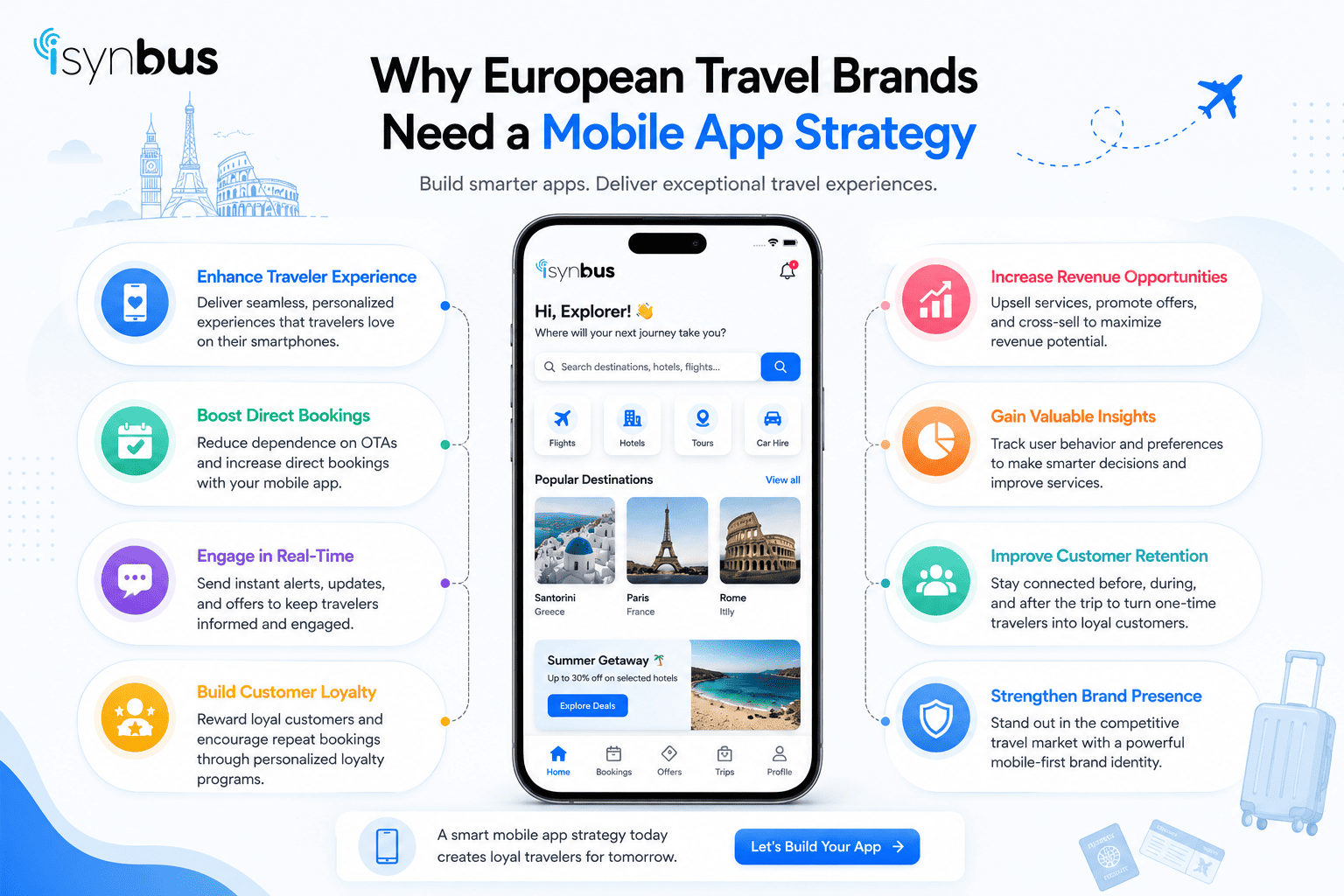
Modern travellers require not only convenience but also assistance in real time, personalized suggestions, and constant involvement in their experience from the moment of planning until they get back home. In such a way, travel agency mobile app development becomes an effective means of increasing customer satisfaction and developing brand loyalty for companies that need more direct bookings.
The rise of AI-powered travel app development is further transforming the industry by enabling recommendations, instant customer support, predictive travel insights, and personalised user experiences that keep travellers engaged at every touchpoint. Based on the current travel app development trends of 2026, European travel and hospitality companies have adopted a mobile-first approach to remain competitive and generate more profits. Here are the reasons:
1. Mobile-First Travel Experiences Are the New Standard
A booking widget is an embeddable calendar and scheduling interface that lets customers reserve services, appointments, or rentals directly from your website. It automates 24/7 availability and syncs with your calendar without requiring coding skills
2. Drive More Direct Reservations
Reducing dependency on travel agencies helps businesses improve profit margins. A feature-rich travel booking app encourages travellers to book directly through exclusive discounts, loyalty rewards, personalised deals, and simplified payment options.
Booking app case studies
Demonstrate how businesses that implement direct booking features experience higher customer retention, increased revenue, and lower commission costs. Direct bookings also allow businesses to retain ownership of valuable customer data, which can be used to personalise experiences and improve customer engagement. This creates stronger customer relationships while reducing operational expenses
3. Keep Travellers Engaged Throughout the Journey
Typically, the job of a reservation system is completed once the booking is made. Travel mobile solutions, on the other hand, allow brands to remain in touch with their customers by sending travel reminders and post-trip offers. Businesses that remain connected with travellers at every stage of the journey build stronger trust, encourage repeat bookings, and significantly improve long-term customer retention compared to businesses that communicate only during the reservation process.
4. Offer Tailored Travel Experiences
A travel app can also recommend premium upgrades, travel packages, nearby experiences, and exclusive deals based on real-time location and previous interactions. Businesses investing in
Uber-like app development
can further enhance the user experience with features such as live GPS tracking, instant booking, real-time notifications, secure payments, and on-demand services, making travel more convenient, personalized, and engaging for customers.A custom travel app can leverage customer information to suggest hotels, attractions, restaurants, upgrades, and activities based on customer interests. Additionally, tailored experiences encourage customers to explore more services within the app, increasing booking value and overall revenue. Customised experiences enhance customer satisfaction and boost conversion rates.
5. Strengthen Customer Loyalty
One of the biggest benefits of mobile apps for travel agencies is their ability to support long-term customer relationships. Mobile apps make loyalty programmes easy to use, enabling users to earn rewards, redeem points, enjoy offers and access membership benefits from a single app. Over time, loyal customers often become brand advocates who recommend the company to family and friends, creating valuable word-of-mouth marketing that supports long-term business growth.
6. Unlock Additional Revenue Streams
A mobile application can offer opportunities much greater than booking a room or a flight. By working with a travel app development company, businesses can add features like airport transfers, travel insurance, event tickets, premium upgrades, and restaurant bookings. Businesses can collaborate with local service providers to earn commission on every successful referral or booking made through the app. Additionally, targeted promotions based on customer preferences improve conversion rates because users receive recommendations that match their interests.
7. Make Better Business Decisions with Data
Mobile apps gather important data on booking patterns, traveller preferences, spending behaviour, and engagement. These analytics, combined with
AI automation services
, play a vital role in the digital transformation of the travel industry by automating workflows, analysing customer behaviour, and delivering personalized experiences. Businesses can optimise marketing campaigns, predict travel trends, streamline operations, and make informed strategic decisions using AI-driven insights. Rather than relying on assumptions, they can leverage real-time data to better understand customer needs, adapt to changing preferences, and improve overall business performance.
8. Increase Customer Retention
Understanding why travel companies need a mobile app becomes clear when looking at customer retention. Rather than losing touch with customers after a trip, businesses can stay connected through personalised recommendations and
AI chatbot services
that provide instant customer support, answer travel-related queries, and deliver 24/7 assistance. These intelligent interactions encourage repeat bookings while enhancing customer satisfaction. By consistently delivering relevant content and personalised experiences, travel companies reduce the likelihood of users switching to competitors. Strong customer retention ultimately leads to higher customer lifetime value, repeat bookings, positive reviews, and sustainable business growth.
How Global Travel Brands Are Driving Success Through Mobile Apps
The top travel companies make use of the mobile app not only for making reservations but also offer their customers a hassle-free experience by increasing engagement and building up loyalty using the advanced digital features.
Here are some of the best examples of leading travel and hospitality brands that have evolved their mobile apps from simple booking tools into powerful digital platforms that enhance customer experience and support long-term business growth.
| Travel Brand |
Key Mobile App Features |
Business Benefit |
| Marriott |
Mobile check-in, digital room keys, loyalty rewards, personalised offers |
Higher customer loyalty and repeat stays |
| Lufthansa |
Live flight updates, digital boarding passes, loyalty programme management |
Improved passenger convenience and satisfaction |
| Airbnb |
Host messaging, trip management, local experiences |
Greater customer engagement and seamless travel planning |
| Booking.com |
Personalised recommendations, trip planning, transport bookings, loyalty benefits |
Increased customer retention and repeat bookings |
| easyJet |
Mobile check-in, digital boarding passes, flight alerts, self-service booking management |
Faster travel experience and reduced customer friction |
1. Marriott
Marriott
has transformed its mobile app into a complete guest experience platform. The app is not just a tool for booking reservations; it also enables digital check-in, mobile keys to unlock rooms, loyalty rewards and personalised offers. These features enhance the convenience and foster customer loyalty and repeat visits.
2. Lufthansa
The mobile application
Lufthansa
makes travel more efficient and stress-free. Digital boarding passes, real-time flight notifications, flight status tracking and loyalty programme benefits are all possible for passengers. This seamless experience enhances customer satisfaction and eliminates travel-related uncertainty.
3. Airbnb
Airbnb
is more than just a place to stay; it’s a platform for communication with hosts, trip organisation and curated local experiences. Its success is a testament to the prevailing trends in travel app development in 2026, which prioritise providing all the users with a comprehensive travel experience rather than just booking services.
4. Booking.com
Travel mobile solutions enable
Booking.com to assist travellers in managing all phases of their travel. In addition to hotel bookings, users are offered destination suggestions, travel options, attraction bookings and loyalty points, making travel more interesting and convenient.
5. easyJet
easyJet’s
bespoke travel app allows passengers to check in online, access digital boarding passes, get instant flight alerts and manage bookings independently. These self-service options minimise friction, streamline operations, and boost the customer experience.
Your Guide to Developing a Travel Mobile App Strategy
When it comes to developing a travel booking app, a well-defined development process can help you build a scalable, easy-to-use, and future-proof app.
1. Define Your Business Goals and Target Audience
The first step in how to build a travel booking app is identifying your business goals and understanding your target audience. Understanding their preferences can guide the development of the app’s features and user experience, whether you’re catering to tourists, business travellers, hotel guests, or airline passengers. A clear strategy will help you meet customer needs and help your business grow over time.
2. Select Features That Deliver Real Value
Choosing the best mobile app features for travel companies is essential for delivering value. Include functionalities such as booking management, digital itineraries, real-time notifications, personalised recommendations, customer support and loyalty programmes. Focusing on features that address actual customer needs enhances user experience and boosts the likelihood of sustained success.
3. Create a Simple and Intuitive User Experience
A custom travel app for European travel brands should offer a clean, intuitive interface that makes trip planning, booking, and travel management effortless. Similar to a
classified app, where users can quickly browse, search, and access relevant listings, a travel application should provide fast navigation, responsive design, and a seamless booking flow. These features improve customer satisfaction, simplify the user journey, and encourage travellers to return for future trips.
4. Build, Integrate, Launch, and Continuously Improve
The last phase of the travel app development for tour operators is the actual creation of the app, integration of booking engines, payment gateways, CRM systems, maps, and third-party travel services, and thorough testing. Once launched, the app is continuously monitored, updated, and enhanced to maintain its security, competitiveness, and relevance to evolving traveller expectations.
Final Words
To sum up, a booking widget helps customers make reservations, but it cannot support the complete travel experience. With changing customer expectations, travel brands in Europe need a mobile-first approach that goes beyond simple bookings. Investing in the right travel app solution, including custom mobile applications and specialised bus app development services, enables businesses to improve customer satisfaction, unlock new revenue opportunities, streamline operations, and achieve long-term growth in an increasingly competitive travel market.
FAQs
Q1. Why do travel businesses benefit from a mobile app for direct bookings?
By offering direct booking opportunities with exclusive offers, loyalty programmes, personalised promotions, and push notifications, a travel mobile app can help to lessen reliance on third-party booking platforms.
Q2. Which features are essential for a travel and hospitality mobile app?
Key features include booking management, digital itineraries, real-time updates, secure payment processing, personalised recommendations, customer support, and loyalty programmes. Other features can be tailored to the business requirements.
Q3. In what ways do mobile apps increase customer loyalty for travel brands?
Mobile apps enhance customer loyalty by providing personalised experiences, rewards programmes, exclusive member benefits, and ongoing engagement before, during, and after each trip.
Q4. What is the estimated cost of developing a travel mobile app in Europe?
The cost of travel app development in Europe can range from €20,000 to €200,000+ based on the complexity of the app, features, technology stack, and the expertise of the development team.







 Prabhnoor Kaur