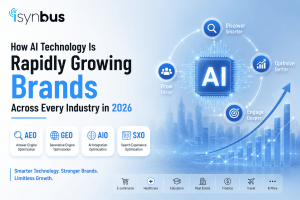
Discover how AI ads are transforming the campaign, budget and results landscape in 2026 and how the right digital marketing services can help you compete.
Ad spend was intuitive. A marketer picked a headline, tried a few images and waited a week to see what worked. That process is dying a fast death. Today, machines write the headlines, pick the images and tweak bids in real time, often before a human even sees the dashboard. This change has a name: AI advertising, or AI ads for short, and it’s rewriting the rulebook for every business that spends money online.
Whether you own a small shop, you do marketing for a rising brand, or you work for a digital marketing company, knowing this shift is no longer optional. That’s the difference between a campaign that scales and one that quietly burns through budget.
What Do AI Ads Mean Exactly?
AI ads are ads that are created, optimised or delivered using artificial intelligence tools as opposed to manual, step-by-step human effort. This includes a great variety of activities:
- Tools to generate ad copy and images or video clips.
- Machine learning algorithms determine audience segments with a high likelihood of conversion.
- Automated bidding systems that adjust spend by the hour, not the week.
- Dynamic creative optimisation where the ad itself changes depending on who’s viewing it.
This is not a science fiction story. Google, Meta and most other major ad platforms already run AI under their standard campaign tools. What changes in 2026 is the depth of that automation and how much control it takes away from or hands back to the marketer, depending on how it’s used.
How AI Ads Work Behind the Scenes
A typical AI-based campaign uses multiple data sources at once: previous buying behaviour, browsing habits, type of device, time of day, and even weather in some retail cases. Then the system creates hundreds of micro-variations of the ad and tests them simultaneously against small slices of the audience.
Here’s a very simple comparison of how this differs from the old approach:
| Factor | Traditional Advertising | AI-Driven Advertising |
| Ad creation | Manual copywriting and design | Generated or assisted by AI tools |
| Targeting | Broad demographic buckets | Behaviour-based, real-time segments |
| Budget adjustments | Weekly or monthly reviews | Continuous, automated bid changes |
| Testing | A/B testing over days or weeks | Hundreds of variants tested at once |
| Personalisation | Same ad shown to most users | Creative shifts per viewer |
This is why a good search engine optimisation company or ad partner now needs technical fluency, not just creative instinct. The two disciplines are coming together.
Why 2026 Is a Turning Point
There are a few forces coming together this year. Ad platforms have trained their AI models to a point where the output quality no longer feels obviously synthetic. Privacy regulations have also pushed advertisers away from cookie-based tracking, so platforms rely more heavily on AI to make sense of thinner data. Attention is so fiercely competed for that automated competitors can’t be managed manually any longer. This means that for businesses working with any digital marketing service, campaigns built on 2023-era playbooks are quietly losing ground.
Where This Hits Hardest: SEO, PPC and Social Media
Search Engine Optimisation
Search is changing itself. With AI-generated summaries now appearing above traditional results for many queries, ranking strategy must account for both classic search visibility and how content is used in AI answers. Businesses seeking Search Engine optimisation in India are increasingly asking for structured, answer-ready content instead of just keyword-stuffed pages.
Paid Search and PPC
AI bidding PPC (Pay-per-Click) services can be more efficient than manual campaigns, yet they require more supervision. Without the oversight of guardrails, an algorithm that optimises for clicks alone can drift away from real business goals.
Social Media
A Social Media optimisation Company using AI tools can now schedule, test and refine content across platforms much faster than a manual team. The catch in doing so is that audiences can quickly spot generic AI output, so brand voice still needs a human hand guiding the final product.
What This Means for Small Businesses
Many believe that AI advertising is only suitable for companies with large budgets. That is backward. Automated bidding and creative testing actually reduce the entry cost for smaller advertisers, because the software does work that used to require a full media-buying team.
Here’s where affordable small business SEO and lean ad management really leverage AI tools:
- Smaller daily budgets can still achieve statistically useful test sizes.
- AI reduces costs of creative production, helps with drafts and variations.
- Local businesses can target hyper-specific neighbourhoods or search intents without needing to hire a channel specialist.
Choosing the Right Partner in an AI-Driven Market
Not every agency offering digital marketing solutions really knows how to drive AI tools instead of just switching them on. Before you sign up with any digital marketing company, it’s worth asking a few straight questions:
| Questions to Ask | Why It Matters |
| Which AI tools do you actually use? | Vague answers usually mean surface-level automation |
| How do you review AI-generated creative before it goes live? | Unchecked output can drift off-brand fast |
| Can you show real campaign data, not just projections? | Results matter more than tool names |
| How do you handle data privacy in targeting? | Regulations are tightening across most markets |
Teams that see AI as a co-pilot, rather than autopilot, tend to get more stable, defensible results.
The Road Ahead
AI ads aren’t so much replacing marketers as they are changing what the job actually involves. Less time is spent on repetitive testing and manual bid tweaks, and more time goes to strategy, brand judgement, and deciding which automated suggestions are actually worth running. The businesses that change their approach to digital marketing services with this shift instead of fighting it are the ones that will likely have an edge through the rest of 2026.
Frequently Asked Questions
Are AI ads costlier to run than traditional ads?
Not usually. Most AI-powered platforms optimise spend automatically, which generally reduces cost per result compared to manual bidding, yet expertise is still needed for setup and monitoring.
Can small businesses realistically compete with big brands with AI ads?
Yes. Automated targeting and creative testing mean fewer resources are required to run effective campaigns, which closes the gap between small and large advertisers.
Will AI-generated ad content hurt my brand’s authenticity?
It can, if unchecked. The best approach is to combine AI-generated drafts with human review to ensure the tone and messaging are on-brand.


 Prabhnoor Kaur