A website isn’t a digital brochure. It’s often the first serious interaction a customer has with your business. Our professional website development company turns your business goals into a fast, secure, responsive and conversion-focused website. The right development partner handles the technical side of the experience from planning and UX design to coding, integrations, testing, SEO setup and post-launch support. If you are looking for a corporate website, eCommerce store, customer portal or custom web application, understanding the services, development process and investment expected will help you choose the right team and avoid costly surprises down the road. Clear requirements, realistic budgets and measurable business goals to start.
What Does a Website Development Company Actually Do?
A website development company creates, enhances and maintains websites for individuals, organizations and businesses. But the job is a lot more than just writing code. A good development team ties together business goals, user experience, design, technology, security, performance and scalability into one working website. For example, a company that is launching a new service may need more than five attractive pages. It could require lead forms integrated with a CRM, analytics tracking, a content management system, technical SEO, mobile optimization and a framework to convert visitors to enquiries. Here’s where professional website development services come in handy.
Based on the project, a development company may handle:
- Business and technical requirements
- Website architecture and technology selection
- UI/UX design
- Front-end and back-end development
- CMS implementation
- eCommerce functionality
- API and third-party integrations
- Database development
- Website security
- Performance optimization
- Search engine optimization setup
- Quality assurance and testing
- Deployment and hosting
- Website maintenance and support
Key Website Development Services You Can Expect
The term “website development services” includes multiple grounds and not every company provides the same mix. Below is the breakdown of what’s generally covered.
| Service Category | What It Covers |
| Frontend development | The visual layer the user interacts with, e.g. layout, navigation and responsiveness |
| Custom web development | Custom frontend and backend development to your data model and workflows |
| Backend development | Server logic, databases and the systems that power dynamic content |
| CMS development | Building on platforms like WordPress, Drupal or a headless CMS setup |
| E-commerce development | Product catalogues, payment gateways, cart functionality and inventory sync |
| Web Application development | Custom tools like booking portals, CRMs or internal dashboards |
| API integration | Connecting your site to payment processors, CRMs or third-party tools |
| Website maintenance | Ongoing updates, bug fixes, security patches and performance monitoring |
| SEO & performance optimization | Site speed, mobile-friendliness and technical SEO groundwork |
Most agencies will bundle a few of these together depending on the size of your project. A small business site may require just frontend and CMS work, while an enterprise platform may need backend architecture, API integrations and dedicated maintenance retainers.
Why Do Businesses Look for a Custom Website Development Company?
- Unique functionality that off-the-shelf themes can’t support, like a proprietary booking engine or a multi-vendor marketplace.
- Smooth integration with internal tools such as inventory systems, CRMs, or accounting software.
- A design that visually separates you from the competition using the same page builder.
- Scalability to handle growing traffic, transactions, or user accounts without having to rebuild later.
- Full ownership of the codebase instead of being locked into a 3rd party platform’s rules.
Custom development is more expensive and takes longer up front, but it’s worth it when your business model doesn’t fit into a neat box.
Why Region Matters for Website Development Company in India?
Multiple companies from the US, UK and Australia are outsourcing to a website development company in India, and the reasons go beyond just lower rates. Over the last two decades, India has developed a mature IT services ecosystem, with thousands of firms that specialise in everything from small business websites to enterprise-grade platforms. The following are potential reasons this trend keeps growing:
- Cost efficiency: India’s development rates are generally 40% to 60% lower than similar work in North America or Western Europe, without a corresponding reduction in quality.
- Technical depth: Indian developers routinely work across a wide variety of stacks, from PHP and WordPress to MEAN, MERN and Python frameworks.
- English proficiency: Communication is rarely a bottleneck, as most agencies have project managers who are fluent in business English.
- Time zone coverage: Many firms overlap hours with US and European clients, and some run 24-hour shifts to support clients.
- Scalable teams: Easier to add developers or QA testers midway through a project without the long hiring cycles common in Western markets.
That said, outsourcing works best when you vet the agency’s portfolio, check client reviews independently and confirm their communication process before signing a contract.
Understanding the Website Development Process Step by Step
A trusted website development process follows a fairly consistent pattern, no matter the tools and terminology that shift from one agency to another. Here’s how a usual project unfolds.
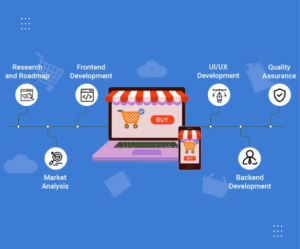
- Discovery and requirements gathering: The agency will ask you questions about your business goals, target audience, competitors and must-have features. This stage sets the scope and prevents expensive changes later.
- Wireframing and planning: Before any visual design takes place, developers and designers map out the site structure, page hierarchy and user flow.
- UI/UX design: Designers design mockups to show colours, typography and layout. Here, most agencies do at least one or two rounds of revisions.
- Development: This is where the frontend and backend teams write the actual code, build the database and connect any required integrations.
- Content integration: Copy, images, videos and product data are uploaded into the site’s structure.
- Test and QA: Before launch, the team checks for broken links, slow load times, cross-browser issues and mobile responsiveness.
- Deployment: Once you choose a hosting environment, your site goes live. DNS and SSL configuration is handled at this stage.
- Post-launch support: They continue to fix bugs, monitor performance, and make minor updates for a set period after launch, often 30 to 90 days.
- Box office guarantee: The most common reason websites launch late or require immediate rework is skipping steps, especially discovery and QA.
Understanding Website Development Cost
The cost of website development can vary widely depending on the complexity, region and technology stack involved. There isn’t one number that fits all projects, but here’s a realistic breakdown based on common project types.
| Type of Website | Estimated Cost Range (USD) | Typical Timeline |
| Basic informational site (5–10 pages) | $1,500 – $5,000 | 2–4 weeks |
| Small business website with CMS | $3,000 – $10,000 | 4–6 weeks |
| E-commerce store (mid-size catalog) | $8,000 – $25,000 | 6–10 weeks |
| Custom web application | $20,000 – $80,000+ | 3–6 months |
| Enterprise-grade platform | $50,000 – $200,000+ | 6–12 months |
Factors That Affect Website Development Costs
- Design Complexity: Custom animations and bespoke UI elements are more costly than template-based layouts.
- Number of pages and features: Each additional page, form or integration adds development hours.
- Third-party integrations: Payment gateways, CRMs and marketing tools all need time to set up and test.
- Content volume: Moving existing content or writing new copy impacts the overall budget.
- Continuous maintenance: Monthly retainers for updates and security patches typically range from $100 to $1,000, depending on site complexity.
- Location of agency: As mentioned previously, regional rate differences have a big impact on the final invoice.
It is a set rule of thumb to request itemized quotes from at least three agencies before you commit. A quote that groups everything into one flat number without any breakdown is a red flag worth questioning.
How to Choose a Convenient Website Development Partner?
Choosing an agency should never be based on who offers the lowest price. The things that really count are:
- Portfolio relevance: Look for projects in your industry or with similar functionality requirements.
- Technical stack fit: Ensure they work with the platform or framework your project actually needs.
- Communication style: Find out how often you will receive updates and who your main point of contact will be.
- Post-launch support conditions: Know what’s included after launch and what is a billable change.
- Client Testimonials: Reach out directly to at least one past client, instead of just looking at testimonials on the agency’s website.
A quick discovery call will typically tell you more about whether an agency is competent than any sales pitch ever will.
Final Thoughts
Selecting a website development company is less about finding the cheapest option and more about finding a team that understands your business goals and communicates clearly through every stage of the build. Whether you’re looking at a lean startup site or a fully custom platform, knowing which services are involved, the typical process and realistic cost ranges puts you in a much stronger position to negotiate and plan your budget. Take the time to vet a few agencies, ask pointed questions about their process and you’ll end up with a site that actually earns its keep.
Frequently Asked Questions
How long does it take to create a website?
A basic business website typically takes 2 to 6 weeks, while custom applications or enterprise platforms range from 3 to 12 months, depending on complexity and the number of integrations.
Should you take an Indian website development company for a US-based business?
Yes, for most small and medium-sized projects, the savings are significant and many Indian companies have good portfolios servicing international clients, but it is always a good idea to check references and previous work before signing a contract.
How does a template-based site differ from a custom-built site?
Template-based website. A template-based site utilises pre-built themes and page builders. It’s quicker and more affordable to launch. A custom-built site is coded from scratch to your exact workflow. More flexible and scalable but at a higher upfront cost.



 Prabhnoor Kaur