

AI & Automation
AI in Logistics: Key Benefits, Use Cases, and Future Trends
 Prabhnoor Kaur
- October 15, 2026
 Prabhnoor Kaur


Businesses today need innovative digital solutions to remain competitive in an increasingly digital world. Investing in modern technology improves customer experiences, streamlines operations, and supports sustainable business growth. Software Development is essential for companies to create solutions that help them increase operational efficiencies and grow sustainably in the future.
A strong digital presence also depends on website development, which strengthens brand credibility, improves user experience and creates seamless online interactions. Therefore, together, these technologies help businesses adapt to changing market demands, deliver much greater value to customers, and achieve sustainable success.
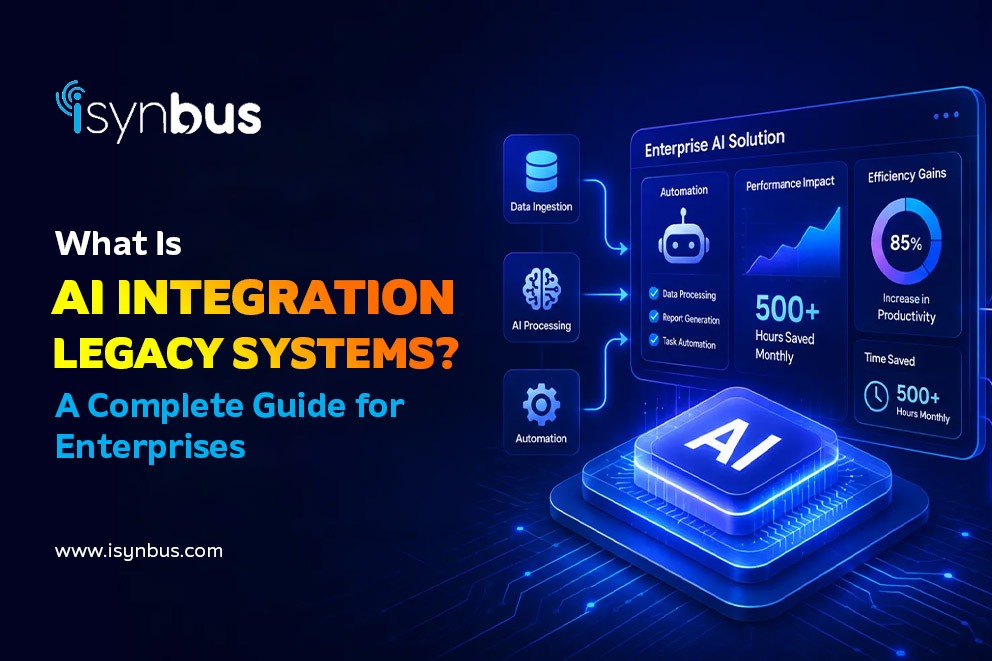
AI Integration in Legacy Systems implies the incorporation of artificial intelligence features into existing Legacy Systems without any need for replacement of those systems. In this way, businesses have the chance to automate processes, perform analysis of historical data, make effective decisions and provide a better experience to customers without spending money on replacing their existing infrastructure. It also complements broader digital initiatives such as Website Development and Android App Development, helping enterprises create smarter, connected, and future-ready digital ecosystems through Enterprise AI Integration.
Businesses are adopting artificial intelligence in their legacy systems to achieve efficiency, provide better experiences to customers, and drive their digital transformation initiatives. Instead of changing their entire infrastructure, businesses are using AI to leverage their present investments while acquiring top solutions.
Businesses are adopting AI Integration to streamline repetitive tasks, minimize human error, and boost productivity in their existing systems. Moreover, with the help of top AI Automation Services , businesses can optimise their Workflow Automation , speed up approvals, and make the most of their resources without the need to replace current infrastructure. This way, employees can concentrate on activities that help the business grow in the long term and innovate while operational costs are reduced.
Implement legacy business applications in a modern way at a lower cost. Switching to legacy platforms can be costly and disruptive. Rather, organizations are turning to AI automation solutions to augment the capabilities of their current software with predictive analytics, intelligent decision-making, and Business Intelligence. AI Modernization helps companies maximize the lifespan of existing technology investments and gradually modernize systems, minimizing implementation risks and ensuring business continuity during the transition.
AI-Powered Legacy Systems enable Legacy Systems to adapt more easily to evolving business requirements without requiring a complete replacement. Customer support is a crucial component of Enterprise Modernization, and AI-powered customer support has become a necessity. By integrating AI Chatbot Services with legacy platforms, businesses can offer immediate responses and 24/7 support. Top virtual assistants can cut down response times, enhance customer satisfaction and support teams in handling more inquiries without compromising quality across various communication channels.
An effective AI integration architecture allows companies to modernize their legacy systems without disrupting their current infrastructure. These four layers form a scalable, secure, and flexible architecture that empowers AI integration in legacy systems and fosters ongoing innovation and enterprise modernization.
| Layer | Key Technologies | Primary Function |
|---|---|---|
| Data Layer | Data pipelines, event streaming, data processing tools, centralized data repositories | Collects, cleans, and prepares legacy data for AI analysis and processing. |
| Integration Layer | APIs, middleware, automation tools, system connectors | Links legacy applications with AI platforms and enables secure data exchange. |
| AI/ML Layer | Machine learning models, Generative AI, Agentic AI, predictive analytics | Processes business data, generates insights, automates decisions, and supports intelligent workflows. |
| Application Layer | AI-powered dashboards, virtual assistants, reporting platforms, monitoring systems | Delivers AI-driven insights, automation, and interactive experiences to end users. |
The cost involved in integrating AI in legacy systems is dependent on many factors such as the size of the project, complexity of the legacy systems, quality of data, etc. Firms will be spending between $20,000 for a simple pilot programme and $100,000 plus for an enterprise-level AI project. Data preparation usually involves the highest cost, which is about 25–40 per cent of the total project cost.
| Cost Category | Small Pilot | Mid-Scale Program | Enterprise-Wide |
|---|---|---|---|
| AI Readiness Assessment | $10K–$15K | $10K–$20K | $20K–$30K |
| Data Engineering & Preparation | $10K–$20K | $10K–$30K | $15K–$40K+ |
| AI Model Development / Licensing | $10K–$40K | $20K–$50K | $30K–$60K |
| Integration Architecture & Middleware | $10K–$50K | $20K–$50K | $30K–$70K |
| Testing & QA | $5K–$20K | $5K–$30K | $10K–$40K |
| Change Management & Training | $5K–$15K | $5K–$20K | $10K–$30K |
| MLOps (Monthly, Ongoing) | $2K–$5K/mo | $5K–$15K/mo | $10K–$20K/mo |
| Estimated Total Investment | $20K–$60K | $60K–$80K+ | $80K–$200,000+ |
AI Integration in Legacy Systems allows companies to modernize old systems without upgrading their current infrastructure. This increases efficiency, aids decision-making, ensures a better customer experience, and provides scalability in the future. The following list highlights the advantages that encourage organizations to utilize AI Integration for the best use of their technological resources.
AI Integration can automate repetitive tasks, streamline repetitive processes, and save time for employees from manual work. Businesses enjoy quicker processes, better resource utilization, and reduced operational mistakes. For businesses providing Software Development services, AI in Legacy Systems can enhance the performance of existing applications without the need for a complete overhaul of the infrastructure, which can be expensive. AI-Powered Legacy Systems also help businesses continue operating efficiently while extending the value of their existing technology investments.
AI Integration helps businesses provide personalized, responsive, and consistent customer interactions by making intelligent recommendations and automating support. It is used to analyse customer behaviour and deliver relevant services and quicker responses through various touchpoints. By integrating AI capabilities into web and mobile applications, businesses can achieve a seamless experience that enhances customer satisfaction, fosters brand loyalty and boosts long-term engagement, all while maintaining their current business operations. Generative AI and Agentic AI further strengthen customer engagement by enabling intelligent, context-aware interactions.
Business Intelligence powered by AI converts complex business data into meaningful insights that support faster and more accurate decision-making. It helps organisations achieve Legacy Application Modernization incrementally rather than replacing systems. Intelligent features can be incorporated without disruption and with minimal risk. By integrating AI capabilities with the help of an Android App Development company into enterprise applications, companies can also enhance the capabilities of their mobile users, enabling them to achieve digital transformation that supports for future business growth. Cloud Computing further improves scalability, flexibility, and AI deployment across enterprise environments.
By leveraging AI Modernization, the lifespan of Legacy Systems can be extended by incorporating new features without the need for a complete redevelopment. Businesses lower migration expenses and enhance flexibility, security, and business efficiency. This approach also paves the way for future innovation in e-commerce applications through Software Development, helping make online operations smarter. Similarly, ecommerce web app developers can leverage AI capabilities to augment current web applications, while React Native App Development enables businesses to deliver consistent AI-powered experiences across multiple platforms.
Even though the process of AI incorporation brings numerous benefits to companies, there are a number of obstacles which businesses might face in the course of implementing AI technology.
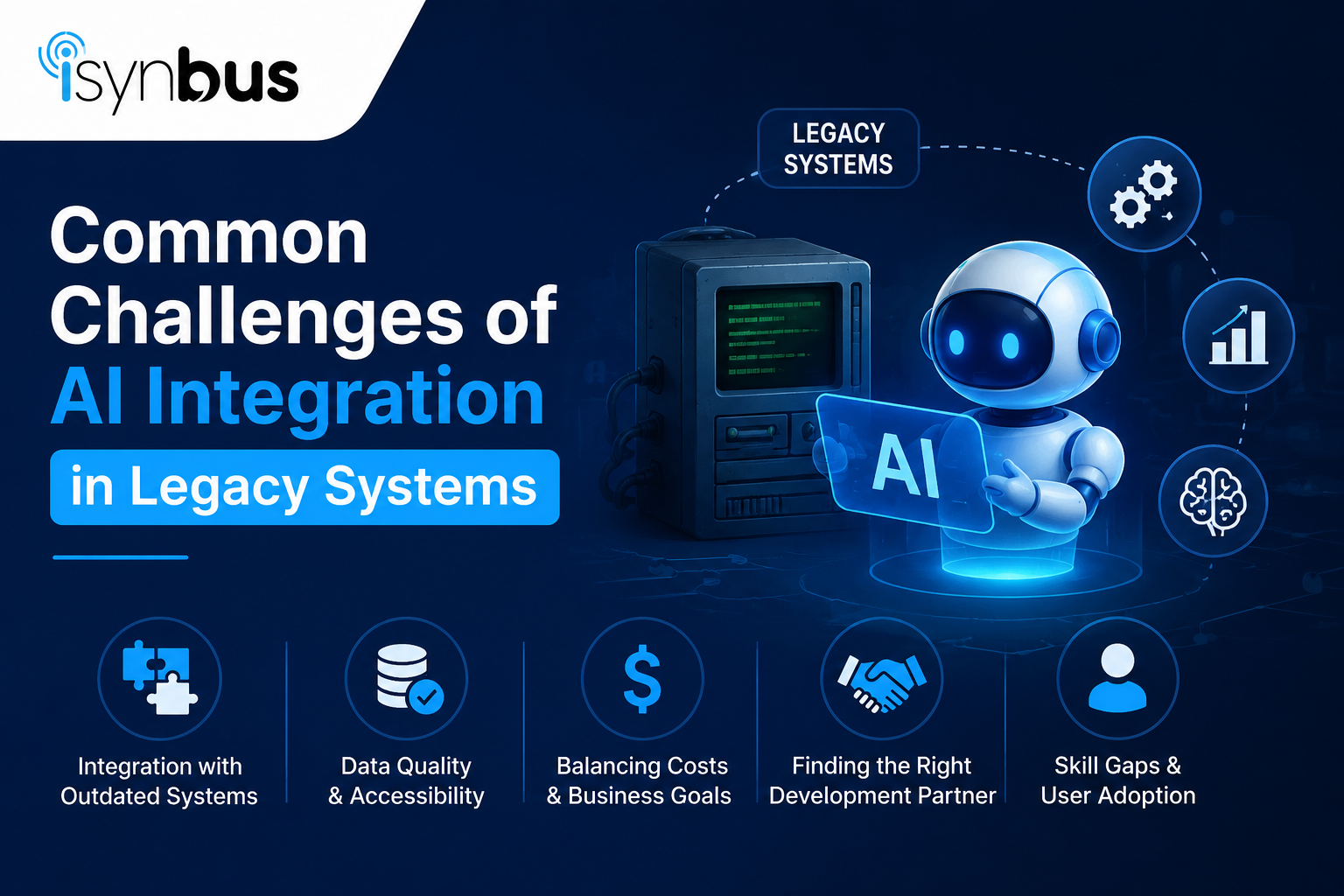
With the right approach and best practices, enterprises can modernize legacy systems efficiently and maximize the long-term benefits of AI across business operations.
Refer to the table below for a quick understanding of the key steps:
| Phases | Focus | Outcome |
|---|---|---|
| Discover | Assess systems | Know your AI readiness |
| Prioritize | Select high-impact use cases | Deliver faster ROI |
| Prepare | Organize quality data | Improve AI performance |
| Partner | Choose AI experts | Ensure seamless integration |
| Grow | Monitor and optimize | Scale AI with confidence |
To sum up, by leveraging AI integration, businesses can modernize their existing systems without the need to replace the current infrastructure, making digital transformation more feasible and cost-effective. With the right implementation strategy, businesses can boost efficiency, improve decision-making, enhance customer experiences and boost scalability. By embracing intelligent legacy modernization, organizations can better leverage AI technologies to foster innovation, stay competitive, and secure sustainable long-term business growth.

Get the latest insights, updates, and trends delivered to your inbox.